← Morocco travel journal
Blog

Mount Toubkal: Complete Guide to Morocco’s Highest Peak
Written by
Rashid
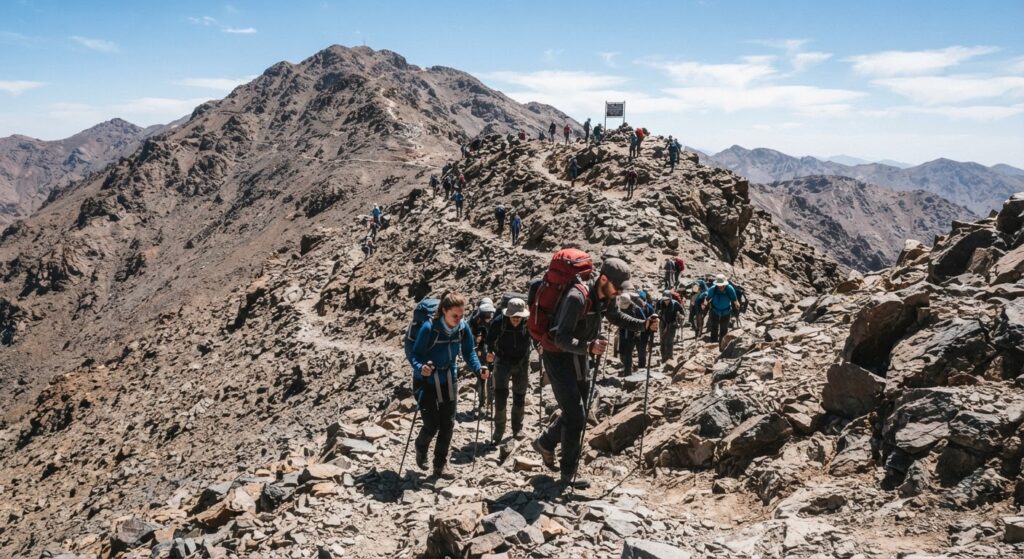
Mount Toubkal stands at 4,167 meters (13,671 feet) – the highest peak in North Africa and one of the most accessible high-altitude summits on the continent. Located in the High Atlas Mountains, just 60 kilometers south of Marrakech, Toubkal offers an incredible trekking experience combining mountain adventure, cultural immersion, and stunning landscape.
This comprehensive guide covers everything you need to know to summit Morocco’s crown jewel.
Why Toubkal Matters
Toubkal isn’t just a mountain, it’s a pilgrimage. For decades, trekkers from around the world have made the journey to stand at 4,167 meters and see three countries from the summit (Morocco, Algeria, and on clear days, Spain across the Strait of Gibraltar).
Unlike high-altitude mountains in South America, Asia, or Africa that require technical climbing skills and weeks of acclimatization, Toubkal is achievable for most reasonably fit people in just 2-3 days. It’s the perfect introduction to serious mountain trekking.
Quick Facts
| Aspect | Details |
|---|---|
| Height | 4,167 m (13,671 ft) |
| Location | High Atlas Mountains, 60 km south of Marrakech |
| Best Time to Visit | May-September (June-August warmest) |
| Trek Duration | 2-3 days minimum |
| Difficulty | Moderate to Challenging |
| Physical Fitness Required | Good cardiovascular fitness |
| Technical Skill | None (hiking only, no climbing) |
| Altitude Sickness Risk | Low to Moderate |
| Cost | $150-400 USD (guided trek) |
| Distance Hiked | ~17-20 km over 2-3 days |
The Toubkal Trekking Experience
What Makes It Special
1. Accessibility from Marrakech
- Only 2-3 hours drive from Marrakech
- No long international flights needed
- Can combine with desert or city tourism
- Perfect for time-limited travelers
2. Cultural Immersion
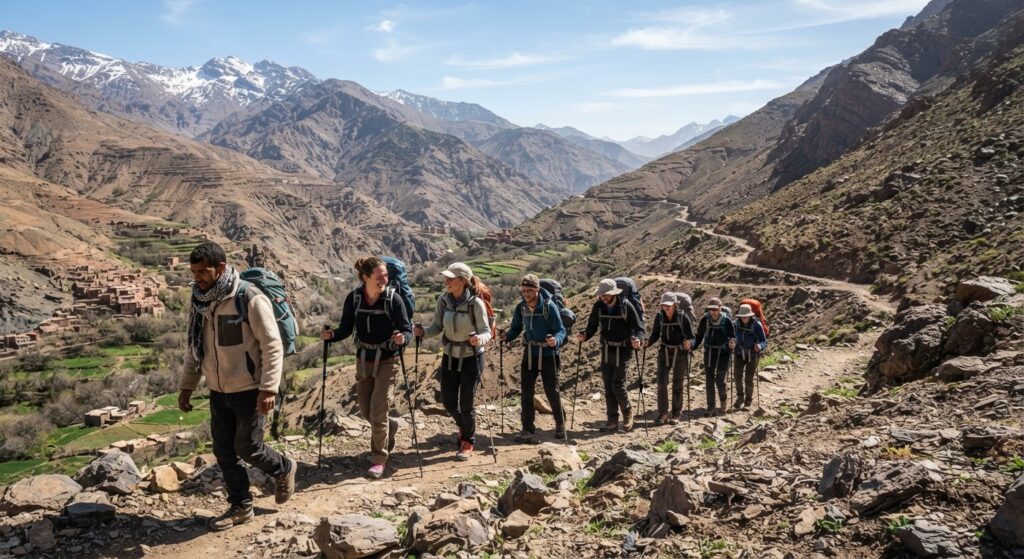
- Trek through Berber villages
- Stay in mountain refuges with local staff
- Interact with Amazigh (Berber) guides
- Experience traditional hospitality
- Learn about mountain life

3. Dramatic Scenery
- Alpine meadows and wildflowers (spring)
- Snow-capped peaks (winter/spring)
- Panoramic views of the Atlas range
- Sunset and sunrise from high altitude
- Valley views stretching to the Sahara
4. Achievable for Most People
- No technical climbing required
- No special equipment needed
- Moderate fitness sufficient
- Well-established route with refuges
- Support from experienced guides
Toubkal Trek Itinerary: 2-Day Summit Route
Day 1: Marrakech to Toubkal Base Camp
Morning:
- Depart Marrakech 6-7 AM
- Drive through the High Atlas (scenic, 2.5 hours)
- Pass through traditional Berber villages
- Arrive at Imlil trailhead (~1,740 m)
Mid-Morning:
- Meet your guide and porter (if hired)
- Begin trek from Imlil
- Trail winds through walnut groves and cedar forests
- Gradual altitude gain
- Pass through Aremd village
Afternoon:
- Continue climbing through alpine meadows
- Stunning views of surrounding peaks
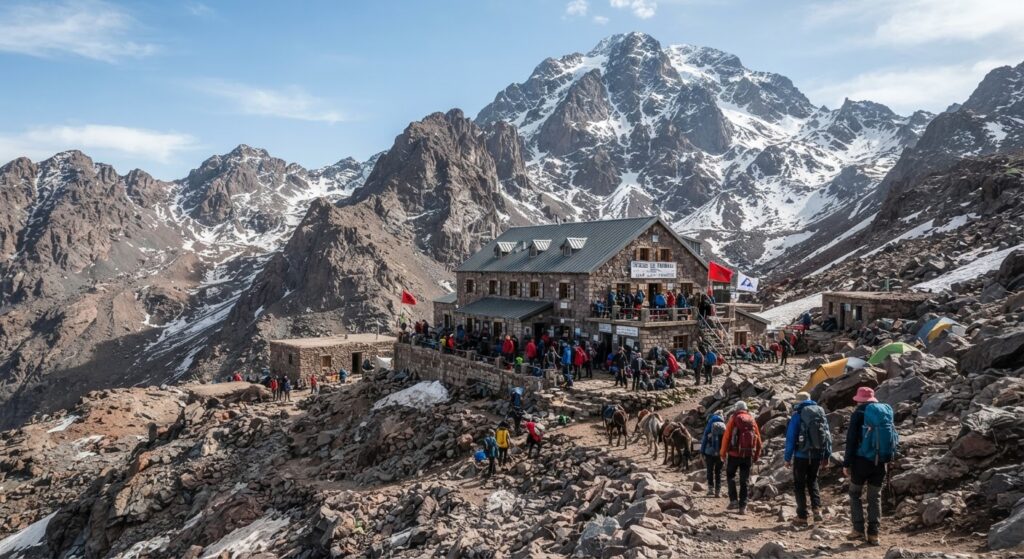
- Arrive at Toubkal Refuge (Neltner Refuge) (~3,207 m)
- Elevation gain today: ~1,500 m
- Distance: ~7-8 km
- Time: ~4-5 hours hiking
Evening:
- Settle into refuge (basic but clean)
- Dinner with other trekkers
- Early rest (important for summit day)
- Sleep at 3,207 m altitude
Day 2: Summit Push & Descent
Very Early Morning (4-5 AM):
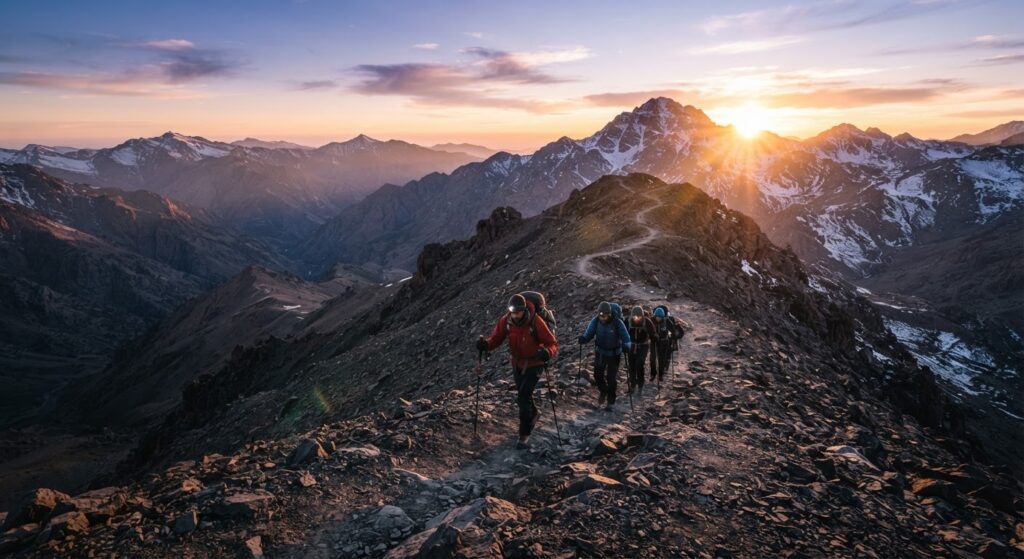
- Wake for pre-dawn start
- Light breakfast
- Depart refuge with headlamps
- Navigate by starlight initially
Morning (5 AM – 9 AM):
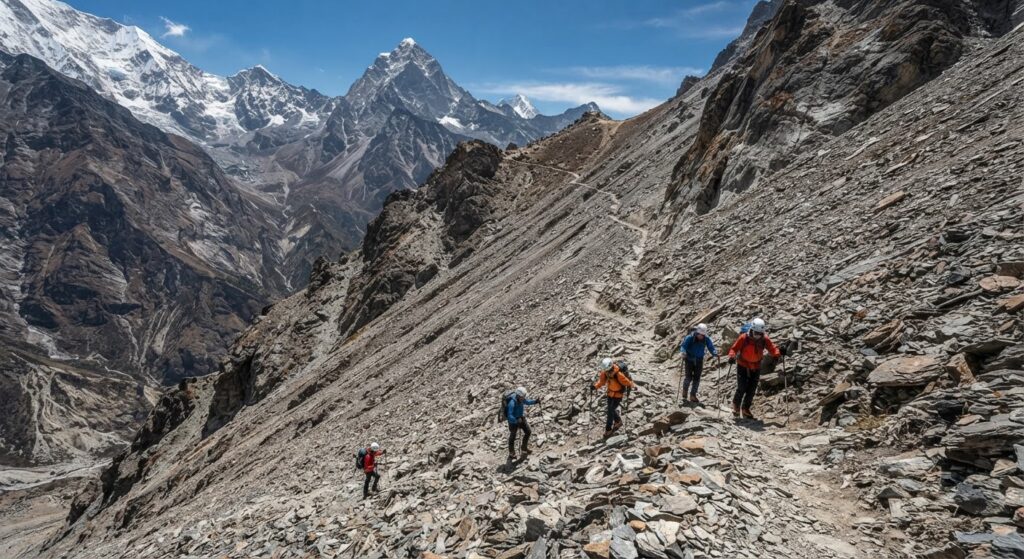
- Trek across rocky alpine terrain
- Steep scree slopes (loose rock)
- Some scrambling (hands and feet climbing)
- Altitude: 3,207 m → 4,167 m
- Distance: ~5 km
- Time: ~3-4 hours
Summit (9-10 AM):
- Reach Toubkal Summit!
- Panoramic views (weather permitting)
- Photos and celebration
- Rest and hydrate
- Spend 30-60 minutes on summit
Descent (10 AM – 4 PM):
- Return same route (downhill faster)
- Descent takes ~2.5-3 hours to refuge
- Rest at refuge
- Trek back to Imlil (2-3 hours)
- Arrive Imlil by evening
Evening:
- Return drive to Marrakech (2.5 hours)
- Arrive hotel 8-9 PM
- Celebrate!
3-Day Option: Acclimatization Route
For those wanting less rushing or better acclimatization:
Day 1: Imlil to Toubkal Refuge (as above)
Day 2: Acclimatization day – explore around refuge, rest, prepare
Day 3: Summit push and descent (as above)
This reduces altitude shock and increases summit success rate.
Physical Demands & Fitness Requirements
What You’ll Experience
Altitude Effects:
- Most people feel mild altitude effects at 3,207 m
- Headache, slight breathlessness common
- Worse for smokers and unfit travelers
- Improves after acclimatization day
Physical Exertion:
- Day 1: Steady climbing, moderate exertion
- Day 2 Summit: High exertion, steep terrain, loose rock
- Scrambling sections require balance and upper body strength
- Downhill puts stress on knees
Weather Exposure:
- Mountain weather changes rapidly
- Can be hot in sun, freezing in shade
- Wind at high altitude common
- Rain/snow possible even in summer
- Temperature at summit: 0-10°C (32-50°F) even in summer
Fitness Level Needed
Good Candidates:
- Regular gym-goers with cardio fitness
- Trail runners and hikers
- People who can sustain 4-5 hours of hiking
- Anyone under 50 in reasonable health
Challenging But Possible:
- Sedentary people who train 4-6 weeks before
- Older trekkers (50+) with good fitness
- Those with minor joint issues (knees, hips)
Not Recommended Without Training:
- Very sedentary lifestyle
- Serious knee/hip problems
- Recent injuries
- Severe altitude sensitivity
Best Time to Trek Toubkal
May-September (Optimal Season)
May-June (Spring)
- Weather: Mild, 15-25°C at base, 0-10°C at summit
- Conditions: Snow likely above 3,500 m, may close route
- Crowds: Moderate
- Best for: Acclimatization, scenic views, wildflowers
- Risk: Altitude sickness, snow/ice hazards
July-August (Summer)
- Weather: Warm, 20-30°C at base, 5-15°C at summit
- Conditions: Dry, fully open, clear skies likely
- Crowds: Peak season (busiest)
- Best for: Predictable weather, guaranteed access, family groups
- Challenge: Many people on trail, refuge crowded
September (Early Fall)
- Weather: Still warm, 18-25°C at base, cooler at summit
- Conditions: Dry, clear skies common
- Crowds: Lower than summer
- Best for: Ideal balance of weather, crowds, and accessibility
- Advantage: Golden hour light for photography
October-April (Off-Season)
October-November:
- Weather: Cool but pleasant, occasional rain
- Conditions: Fewer crowds, still hikeable
- Risk: Unpredictable weather, shorter days
December-April:
- Condition: Heavy snow above 2,500 m, icy
- Difficulty: Technical climbing or mountaineering skills needed
- Not Recommended: For standard trekking
What to Pack
Essential Gear
Clothing (Layer System Crucial):
- Moisture-wicking base layers (top & bottom)
- Mid-weight fleece or insulating layer
- Waterproof/windproof jacket
- Warm hat (balaclava ideal)
- Gloves (lightweight, insulated)
- Wool or thermal socks (5+ pairs)
- Underwear (extras)
- Shorts or light pants
- Long pants (for hiking)
- Sturdy hiking boots (broken in before trek)
Footwear:
- Hiking boots with ankle support (ESSENTIAL)
- Trekking socks (wool or synthetic, not cotton)
- Gaiters (optional but helpful for scree)
Sun & Altitude Protection:
- High-SPF sunscreen (50+, reapply constantly)
- Lip balm with SPF
- Sunglasses with UV protection
- Hat with brim or visor
- Sunburn treatment (aloe)
Hydration & Nutrition:
- Water bottle or hydration pack (3L capacity minimum)
- Electrolyte powder
- Energy bars, nuts, dried fruit
- Salt tablets (for altitude)
Technical Gear:
- Headlamp with extra batteries
- Trekking poles (reduce knee strain on descent)
- Small backpack (30-40L)
- Toiletries (minimal – refuge has basics)
Optional but Helpful
- Altitude sickness medication (consult doctor)
- Sleeping bag liner (refuge provides blankets, but liner adds warmth)
- Dry bag for electronics
- Lightweight emergency bivy/space blanket
- First aid basics
- Blister treatment
- Reusable water bottle (environmental + cost)
What NOT to Bring
- Heavy camping gear (refuge provides)
- Excessive electronics
- Cotton clothing (dries slowly, retains cold)
- Cotton socks
- Heavy guidebooks
- Perfume/cologne (altitude affects tolerance)
Cost Breakdown
Budget Trek (DIY with Local Guide)
- Accommodation Imlil: $20-30
- Guide (per day): $20-30
- Refuge stays (2 nights): $30-40 total
- Meals at refuge: $20-30 total
- Transport Marrakech-Imlil: $10-20
- Transport back: $10-20
- Total: ~$150-200 USD
Mid-Range Trek (Organized Tour)
- 2-3 day guided package: $250-350 USD
- Includes: All meals, guide, accommodation, transport
- From: Marrakech pickup to drop-off
Premium Trek (Comfort + Porter)
- Guided trek with porter: $400-600 USD
- Includes: Premium meals, porter carries gear, experienced guide, accommodation
- Option: Private guide, small group
Altitude Sickness: What to Know
Symptoms (Mild)
- Headache
- Slight nausea
- Fatigue
- Mild breathlessness
Symptoms (Severe – Descend Immediately)
- Severe headache unrelieved by medication
- Confusion or difficulty thinking
- Severe nausea/vomiting
- Loss of coordination
Prevention
- Stay hydrated (drink 3-4L daily)
- Ascend slowly (acclimatization day helps)
- Avoid alcohol
- Eat carbs and salt
- Sleep in refuge before summit push
- Consider medication (consult doctor: Diamox)
Reality Check
Most people don’t get serious altitude sickness at 4,167 m. The altitude is high but not extreme. Gradual ascent, hydration, and rest manage it well.
Practical Tips for Success
1. Train Before You Go
- 4-6 weeks of cardio training ideal
- Long hikes (2+ hours) at home
- Stair climbing with weight
- Even 4 weeks helps significantly
2. Arrive Early in Marrakech
- Spend 2-3 days acclimatizing
- Explore city/culture
- Rest before trek
- Let body adjust to altitude
3. Hire a Good Guide
- Non-negotiable for safety and logistics
- Guides know weather, route changes, pace
- Cost is minimal vs. experience gained
- Book through reputable company or riad
4. Break In Your Boots
- Wear them for weeks before trek
- New boots = blisters guaranteed
- Broken-in boots = comfortable trek
5. Start Summit Push Very Early
- 4-5 AM departure essential
- Reach summit by 10 AM
- Descend before afternoon weather deteriorates
- Early start = better conditions
6. Pace Yourself Day 1
- Don’t race to refuge
- Slow, steady wins the game
- Better acclimatization
- More energy for summit day
7. Pack Light
- Every kilogram matters uphill
- Leave behind non-essentials
- Hire porter if needed ($15-25/day)
- Your knees thank you on descent
8. Sleep Well at Refuge
- Bring earplugs (shared rooms)
- Go to bed early
- Don’t stress about sleep (altitude affects it)
- Rest itself is valuable
The Toubkal Summit Experience
What to Expect at the Top
The View:
- On clear days: panoramic 360° views
- See across the entire High Atlas
- Sahara Desert visible to south
- Mediterranean coast to north (very clear days)
- Surrounding peaks below you
The Feeling:
- Accomplishment (you earned this)
- Thin air (breathing effort noticeable)
- Cold wind (even in summer)
- Quiet, peaceful, isolated
- Time to reflect and celebrate
The Reality:
- Weather often clouds the view (50/50 chance)
- Wind can be intense
- Time limited (need to descend)
- Worth it even with clouds (you summited!)
Common Challenges & Solutions
| Challenge | Solution |
|---|---|
| Blisters | Proper boots, blister kit, trekking poles reduce foot impact |
| Altitude headache | Hydration, rest, over-the-counter painkillers, Diamox (if prescribed) |
| Sore knees | Trekking poles on descent, strong quads before trek, downhill training |
| Bad weather/clouds | Summit still counts, views irrelevant to accomplishment |
| Refuge crowding | Book early or trek May/September off-peak, 3-day option spreads it out |
| Slow pace | Guides help set realistic pace, no shame in going slow |
| Food at refuge | Simple but filling, bring snacks if picky eater |
| Motivation Day 2 | Remember why you came, guide provides encouragement, summit’s worth it |
How Toubkal Fits Into Your Morocco Trip
2-Day Trek + Desert
Option 1: Toubkal Then Desert
- Day 1-2: Toubkal trek
- Day 3: Rest in Marrakech
- Day 4-6: Merzouga desert (3-day tour)
- Total: 6 days
Option 2: Desert Then Toubkal
- Day 1-3: Desert tour from Marrakech
- Day 4: Return to Marrakech, rest
- Day 5-6: Toubkal trek
- Total: 6 days
Full Morocco Circuit
- Day 1-2: Marrakech exploration
- Day 3-4: Toubkal trek
- Day 5-6: Ourika Valley or Fes
- Day 7-9: Sahara desert tour
- Day 10: Return to Marrakech/city
- Total: 10 days epic Morocco adventure
Toubkal vs. Other Mountain Treks
| Trek | Height | Duration | Difficulty | Cost | Accessibility |
|---|---|---|---|---|---|
| Toubkal (Morocco) | 4,167 m | 2-3 days | Moderate | $150-400 | Excellent (near Marrakech) |
| Mont Blanc (Alps) | 4,808 m | 3-4 days | Moderate-Hard | $500-1,500 | Europe-based travelers |
| Kilimanjaro (Tanzania) | 5,895 m | 5-7 days | Moderate | $1,500-3,000 | Expensive, longer |
| Elbrus (Caucasus) | 5,642 m | 4-5 days | Moderate-Hard | $800-2,000 | Remote, technical |
Toubkal stands out for: Accessibility, cost, cultural experience, proximity to Marrakech, achievability for most people.
Why Trek Toubkal?
✅ Achieve something real – Summit Africa’s highest north peak
✅ Cultural immersion – Berber villages, guides, mountain life
✅ Photography – Stunning landscapes, dramatic light
✅ Fitness accomplishment – Prove to yourself what’s possible
✅ Combined trip – Add to desert or city tour easily
✅ Accessible – No technical skills, just determination
✅ Affordable – High-quality experience, reasonable price
✅ Memories – The views and experience last forever
Ready to Summit?
Toubkal calls to trekkers because it’s possible, beautiful, and transformative. You don’t need mountaineering skills. You don’t need to be an elite athlete. You just need determination, proper preparation, and a good guide.
Standing at 4,167 meters, looking across North Africa, knowing you climbed there on foot, that changes you.
Ready to make it happen? Morocco Sahara Adventure specializes in expertly-guided Toubkal treks combined with desert, culture, and city experiences. We handle logistics, guides, accommodation, and meals so you can focus on the summit.
Browse our Toubkal trek packages
Contact us to customize your adventure
[WhatsApp: Send us a message)
FAQ
Q: Can I do Toubkal if I’m overweight or out of shape?
A: Yes, but train for 6-8 weeks. Start with regular cardio. Many people surprise themselves.
Q: What if I don’t summit?
A: Many don’t (weather, altitude, pace). The trek itself is the prize. No shame in turning back.
Q: Is it safe?
A: Very safe. Established route, experienced guides, refugee support. Standard mountain precautions apply.
Q: How do I prevent altitude sickness?
A: Hydrate constantly, ascend gradually, sleep well, rest at refuge. Medication available if needed.
Q: Can I go solo?
A: Not recommended. Hire a guide ($20-30/day). They’re worth every dirham.
Q: What about mountain porters?
A: Optional. Carry your own (light pack) or hire porter ($15-25/day). Your choice based on fitness/preference.
Q: Is the food at the refuge good?
A: Simple but tasty. Tagine, rice, vegetables, bread. Not gourmet, but filling. Bring snacks if picky.
Q: What if weather is bad?
A: You can still summit (poor visibility). Or acclimatize and try next day. Guides judge safety.
Toubkal is waiting. Are you ready?